It's the 20th week of Kindergarten and we're coming off of a four-day weekend thanks to two snow days!
3 Big Goals:
Catch Up After Snow Days
Complete Second Quarter Report Cards
Introduce Winter Weather with Snowman Fun
Famous Words:
"No person has the right to rain on your dreams." -Dr. Martin Luther King, Jr.
This week we have to make some curricular decisions... After two snow days, what do you do? Do you shift everything back in order to cover what was missed? Do you skip over what was missed and press on? I try to do a mix of both. Shifting everything back two days will completely overturn my weekly schedule and routines and skipping lessons may cause me to leave out something important. I'll carefully look over what was planned for the days missed and decide what we need to cover/finish, and what can be left behind. My goal is always to absorb the missed days within the first three days back in order to stay on track with my pacing guide and curriculum. In core math we are moving on from 2D to 3D shapes and learning more about math applications such as graphing. In literacy we are pressing on with Saxon Phonics, Heggerty Phonemic Awareness, and with basic sight words. Our theme is Snowmen and it's always a class favorite! It works out great that my students now have first-hand, recent experience with snow... this will lead us through a great week of learning and fun!
This week's texts are some familiar favorites. The entire Snowmen at Night series by Caralyn Buehner lends itself to some fun open-ended art and writing activities. While Sneezy the Snowman by Maureen Wright pairs well with our upcoming cience unit on winter weather.
"I will never have too many kindergarten guided reading books!"
Most reading teachers will agree with this statement 100%. If you are like me you want to collect all.the.books. I mean, there's no better feeling than redeeming a few thousand Scholastic Book Club points or finding great literature on the sale table at Books-A-Million, right?!? But, filling our shelves with leveled guided reading books is just as important as those awesome read-aloud texts.
In order to improve at anything, what do we do? We practice! If we want to be a better baker, then we bake more. If we want to be a better painter, then we paint more. Reading is no different. If we want our students to be better readers, they need to read more. In her book Literacy Lessons Designed for Individuals,Marie Clay (the researcher behind Reading Recovery) says that beginning or struggling readers need to read a high volume of books. In the beginning stages of Reading Recovery lessons, students need to read 2-4 new texts per day in order to build their experience and confidence.
In order for beginning readers to get all the practice they need to become independent readers, we MUST have books to put in their hands that THEY CAN READ. I know, that sounds simple and trivial, but it's VITAL to a successful guided reading program. In a solid guided reading program students need to read a minimum of 2-3 new texts each week... on their level. This doesn't mean stories that we read everyday for a week and students memorize. This means 2-3 books that we can provide scaffolded instruction and thorough introductions for and then students actually read them on their own. Beyond that, students need to reread these familiar stories for fluency practice and to firm up sight word knowledge and comprehension a minimum of 1-2 times a day.
WHOA. Now you know what I mean by "There's no such thing as too many Guided Reading books in Kindergarten," right?!?! It's imperative that we improve our classroom libraries to provide our kindergartners with real books that they can feel confident tackling on their own. This practice and confidence will press them forward in their reading progress at a much faster rate than memorizing one story per week in a small group setting.
As teachers this is something that we know, but it can be very hard to execute in the Kindergarten classroom. Beginning readers cannot just go to the shelf and pick up any book and read it. In fact, most trade books are at a third grade (or much higher) reading level. While looking at trade books and teacher read-aloud texts is valuable experience for kindergartners, it is not the same as actually reading. In order to move forward as readers, kindergarten students need texts in their hands that they can read with independence... and lots of them!
Finding texts that Kindergartners can read isn't necessarily that difficult. Many basal reading series programs come with a variety of smaller, leveled texts for students to read in guided reading groups or small group instruction. My school uses Saxon Phonics - which comes with an entire series of decodable texts that correlate with the content in the program. Unfortunately for our students, these texts are often not related to our thematic content. Unless you still follow your basal reading teacher's manual from start to finish you've probably found that your supplemental materials don't always match your core resources. Many times, these texts are boring and contrived. What child really cares about characters named Pat and Nan and will engage in a story about how Kip the pup nips at their knee?!?! No adult wants to read stories like that and no child does, either.
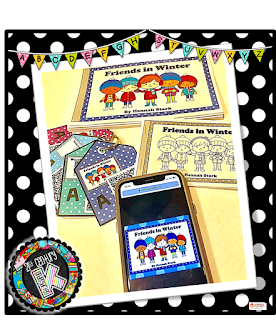
Finding appropriately leveled texts (and lots of them) can be hard. I've bought so many sets of "beginning readers" and phonics-based stories that I've lost track of what I've spent. Some of the best books I've used for beginning readers were the texts used with the Reading Recovery program. These books are intended to be just right for beginning resources, but also tell a story with real characters, photographs, and appropriate words and literacy concepts. For the regular classroom teacher these books can be pricey - especially to create small group sets of books since Reading Recovery is taught one-on-one. The website Reading AtoZ has been my favorite go-to site for years! There are sooooo many books at alllll the levels! So many that searching for what I need from week to week can become very time consuming. So, like any other good, resourceful Kindergarten teacher with (a sometimes unhealthy) love for clip-art and the lifelong dream of becoming a children's author, I've started to write my own books for Kindergarten guided reading. I love that my books are Kindergarten-content specific, fit seamlessly with my science, social studies, and holiday themes, and are fun to read. In addition to creating new printable kindergarten books for guided reading, I've made them full color digital books as well so that students can scan QR codes and read on a tablet or phone and parents can easily provide their child with options for reading on THEIR level at home without the hassle of sending home and collecting my paper copies.
If you are like me and you are looking for an alternative to build an amazing classroom library of guided reading books, then I'd LOVE for you to check out the library I've started over on TpT!
Wondering what to do while you are waiting? Sign up for my FREE Workbook on the Top 3 Must-Do's of Every Guided Reading Lesson...
In my experience as an interventionist I studied a lot of data and found that snow days can really have a negative impact on the progress of struggling and beginning readers. All too often kids just sit at home on these days in front of the TV or iPad. (Unless they have a mom like me who just made her kids turn off all technology and choose to read, write, or draw for an hour and a half... I'm so mean!)
So, how do we keep those kids from slumping when they return?
One way is to dive right back into a routine and schedule with lots of opportunities to read and write. So, I've gathered some resources here for when you have those odd 2-3 day weeks mixed with wintry weather.
Don't forget to check out my fun snow day freebie, too!
I tried to round up so tried and true as well as some new texts for this list.
Click the titles to link to Amazon and learn more about each book.
Make your first day back to school easy and differentiated with my set of printable leveled readers for beginning readers! THis set includes 3 different leveled readers (Levels A, B, and C) about winter snowmen. Resource bonuses include QR codes that link to online e-readers so that your students can read from home on any device! Be sure to check it out!
You heard me correctly! I said,"STOP telling readers to sound out words!"
When young children are reading aloud to us and come to a word they don't know or are unsure about we (teachers and parents alike) typically have one of two responses. Until my recent training in Reading Recovery (read about that here), I responded in these ways, too. BUT, I never really thought about what I was actuallycommunicating to my students (and my own children) when I reacted in these two ways.
One knee-jerk reaction is to just tell the child the word with which he or she is having trouble. The other response we have is to tell the reader to, "Sound it out," when they come upon a new or difficultword.
Let's think about these responses together...
What are we conveying to students when we simply tell them the word with which they are having trouble?
Imagine if you were working to try a new recipe and Bobby Flay (or worse, Gordon Ramsay!) was over your shoulder watching your every move. Would you be nervous or self conscious? I would be! Now imagine that every time you stopped to consult the recipe, double check what you had added last, or went to the spice cabinet, Bobby swiftly stepped in and told you exactly what to do. For awhile this might be nice, but what if the next day you needed to make the same dish and Bobby wasn't there?!? Would you remember what to do? Would you have the same questions? More importantly, would you BELIEVE that you could recreate the recipe? Probably not! After all, Bobby is an expert chef and youare just a novice.
Think about how this applies to helping a young child read... When we jump in and give words while children are reading we communicate that we are the "expert over their shoulder," and we don't believe they can figure out the word on their own. We provide a safety net that does NOT help to foster reading growth. From our action children learn that if they stop or even hesitateTHE EXPERT(us - not them) will be there to givethem all the answers... if we continue this pattern, how can we expect students to EVER learn new words or know what they should do when that safety net is gone?!?
Instead of telling a reader the troublesome word immediately we should...
Wait (at least 3-5 seconds) ANDWatch the child...
notice what he or she is trying alone so that you know how to jump in and help.
If the child is hesitant to try the word alone, prompt him or her to TRY something (really anything) such as look at the picture, read past the difficult word then go back, start the sentence again, etc.
BUT DON'T SAY, "Sound it out!"
When we prompt young readers to "sound out words," what are we reallycommunicating to them? We are essentiallysaying, "start at the beginning and say the sound each letter makes in order to solve the word." And when we use this phraserepeatedly we are really saying, "you should do this every time you come to a tough word because it is the only thing that works."
WHOA! Hold the phone!
If what we just said is true, then what about words with more complex letter combinations, silent letters, schwa sounds, affixes, and those dreaded SIGHT WORDS(man I really HATE those)?!?!
Research shows that accomplished 2nd grade readers attack words in over 60 different ways and most of the time they DO NOTstart at the beginning and sound out words letter by letter.
Instead of telling students to sound out words we should...
Prompt children to use their eyes to search the difficult word for clues.
If the child is hesitant to try on his or her own or is unsuccessful, give specificclues within the word that may help such as digraphs, affixes, beginning sounds, words-within-words, etc. NEW! Check out this accompanying YouTube video with teacher/student examples!
As we are helping young readers learn we havetoremember our hope is they will gainskills so that the next time they read and we aren't there to help them, they will have the confidence and skills to solve new and difficult wordsON THEIR OWN!
NOW, the next time you are listening to a young reader take note of your reaction to their struggles... When you are careful with your response what happens? Comment below and let me know - I can't wait to hear about your experiences!