Pinterest

FB Pixel

Pin it!

Showing posts with label Reading Recovery. Show all posts

15.2.20

There's no such thing as too many Guided Reading books in Kindergarten!

"I will never have too many kindergarten guided reading books!"

Most reading teachers will agree with this statement 100%. If you are like me you want to collect all.the.books. I mean, there's no better feeling than redeeming a few thousand Scholastic Book Club points or finding great literature on the sale table at Books-A-Million, right?!? But, filling our shelves with leveled guided reading books is just as important as those awesome read-aloud texts.

In order to improve at anything, what do we do? We practice! If we want to be a better baker, then we bake more. If we want to be a better painter, then we paint more. Reading is no different. If we want our students to be better readers, they need to read more. In her book Literacy Lessons Designed for Individuals, Marie Clay (the researcher behind Reading Recovery) says that beginning or struggling readers need to read a high volume of books. In the beginning stages of Reading Recovery lessons, students need to read 2-4 new texts per day in order to build their experience and confidence.

In order for beginning readers to get all the practice they need to become independent readers, we MUST have books to put in their hands that THEY CAN READ. I know, that sounds simple and trivial, but it's VITAL to a successful guided reading program. In a solid guided reading program students need to read a minimum of 2-3 new texts each week... on their level. This doesn't mean stories that we read everyday for a week and students memorize. This means 2-3 books that we can provide scaffolded instruction and thorough introductions for and then students actually read them on their own. Beyond that, students need to reread these familiar stories for fluency practice and to firm up sight word knowledge and comprehension a minimum of 1-2 times a day.

WHOA. Now you know what I mean by "There's no such thing as too many Guided Reading books in Kindergarten," right?!?! It's imperative that we improve our classroom libraries to provide our kindergartners with real books that they can feel confident tackling on their own. This practice and confidence will press them forward in their reading progress at a much faster rate than memorizing one story per week in a small group setting.

As teachers this is something that we know, but it can be very hard to execute in the Kindergarten classroom. Beginning readers cannot just go to the shelf and pick up any book and read it. In fact, most trade books are at a third grade (or much higher) reading level. While looking at trade books and teacher read-aloud texts is valuable experience for kindergartners, it is not the same as actually reading. In order to move forward as readers, kindergarten students need texts in their hands that they can read with independence... and lots of them!

Finding texts that Kindergartners can read isn't necessarily that difficult. Many basal reading series programs come with a variety of smaller, leveled texts for students to read in guided reading groups or small group instruction. My school uses Saxon Phonics - which comes with an entire series of decodable texts that correlate with the content in the program. Unfortunately for our students, these texts are often not related to our thematic content. Unless you still follow your basal reading teacher's manual from start to finish you've probably found that your supplemental materials don't always match your core resources. Many times, these texts are boring and contrived. What child really cares about characters named Pat and Nan and will engage in a story about how Kip the pup nips at their knee?!?! No adult wants to read stories like that and no child does, either.

Finding appropriately leveled texts (and lots of them) can be hard. I've bought so many sets of "beginning readers" and phonics-based stories that I've lost track of what I've spent. Some of the best books I've used for beginning readers were the texts used with the Reading Recovery program. These books are intended to be just right for beginning resources, but also tell a story with real characters, photographs, and appropriate words and literacy concepts. For the regular classroom teacher these books can be pricey - especially to create small group sets of books since Reading Recovery is taught one-on-one. The website Reading AtoZ has been my favorite go-to site for years! There are sooooo many books at alllll the levels! So many that searching for what I need from week to week can become very time consuming.

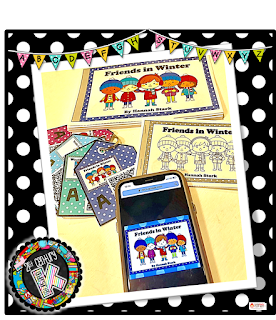
So, like any other good, resourceful Kindergarten teacher with (a sometimes unhealthy) love for clip-art and the lifelong dream of becoming a children's author, I've started to write my own books for Kindergarten guided reading. I love that my books are Kindergarten-content specific, fit seamlessly with my science, social studies, and holiday themes, and are fun to read. In addition to creating new printable kindergarten books for guided reading, I've made them full color digital books as well so that students can scan QR codes and read on a tablet or phone and parents can easily provide their child with options for reading on THEIR level at home without the hassle of sending home and collecting my paper copies.
guided-reading-in-kindergarten

If you are like me and you are looking for an alternative to build an amazing classroom library of guided reading books, then I'd LOVE for you to check out the library I've started over on TpT!

Wondering what to do while you are waiting?
Sign up for my FREE Workbook on the Top 3 Must-Do's of Every Guided Reading Lesson...

OR follow my brand new podcast!

12.2.20

Teaching the Alphabet in Kindergarten


How do you teach the alphabet in Kindergarten? Do you focus on a single letter a day or a week? Do you teach letters in clusters or individually? Do you start at A and end with Z or reorder the letters? There are so many ways to teach the alphabet to young students that lesson planning could easily become overwhelming. Like you, I've used a combination of approaches to create a sense of balanced literacy.
alphabet-in-kindergarten

One of the best books I've ever studied on the topic of reading instruction is The Next Step Forward in Guided Reading by Dr. Jan Richardson. Dr. Richardson is a leading expert and researcher in the field of reading. When I heard her present at the Kentucky Reading Association conference she said that we should teach the entire alphabet early in the kindergarten school year and "with a sense of urgency." The number of letter names children can identify at the beginning of the school year is in direct correlation to the level at which they will be able to read at the end of the school year. Teaching the letter names as quickly and early as possible is vital to high success in learning to read. The sooner students know the majority of letter names (out of 52 total - upper and lower), the higher their reading level will be at the end of the year. (Read all about Dr. Richardson's research here.)

This study made me really analyze my Kindergarten literacy instruction. So, I thought about my entire school day and listed the instructional strategies and programs I use that relate to literacy.
- Scott Foresman Reading Streets Basal Reading Series
-Saxon Phonics
-Michael Heggerty Phonological Awareness
-Stepping Stones to Literacy
-Guided Reading
-Writer's Workshop
-Literacy Centers

WHOA! When I list all of those teaching approaches I realize that I'm most likely over-complicating my instruction and that my struggling students may be lost in a sea of programs and options for learning. So this year I decided to streamline my alphabet instruction (at the least) in order to provide consistency, especially for my struggling students. I decided to go with the Saxon Phonics as my main source of phonics and alphabet curriculum. I use only Saxon's letter picture cues and scope and sequence.

I started the school year with a boot camp style sequential review - teaching one letter per day for the first 26 days of school. We used our "My First Letters & Words" interactive notebook to review each letter's sound(s) and written formation along with exploring tons of fun online songs and videos for each individual letter with our Interactive Alphabet Review. The results from this alphabet introduction were amazing! Students who already had a grasp of most letters were able to firm up their letter knowledge quickly. Students who knew a few letters, picked up a few more. Students who did not know any letters at least had a new frame of reference for what a letter is and the purpose letters serve. This is the first year that MOST of my students new ALL upper and lowercase letters by the first quarter assessment and I'm sure it's due to this beginning of the year alphabet review.
alphabet-interactive-notebookinteractive-notebook-kindergarten

alphabet-interactive-notebook

After our review of all the letters I fell in with our Saxon Phonics curriculum. This scope and sequence covers one letter per week and teaches letters in a particular orders. Some vowels and easier consonants are taught early on in order to give students enough letter-sound knowledge to be able to make and break CVC words within the first few weeks of instruction. Saxon Phonics is an explicit, teacher led program and it isn't a comfortable fit for all teachers, but it is a great learning tool - for teachers just as much as students!


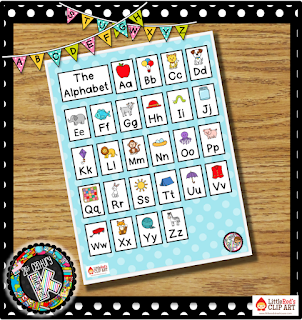
In guided reading groups we review all letters and sounds everyday until students have mastered the list. I do this with an Alphabet Chart (read more about that here) and with individualized cards for finger tracing. When students are struggling with the entire alphabet, it's best to break it into smaller parts, beginning with the letters in the students' names. It may also help to pull out just the vowels when students have mastered consonants. This is where the individual finger-tracing cards come into play.
kindergarten-alphabet-chart


This main thing with alphabet instruction is to keep the system consistent. We don't switch between "hooks" or cues for letters and sounds. I use the same picture cue and the same language for forming letters every single day. This provides a hook on which students can hang their learning for a particular letter/sound that won't fail them at other times in the classroom routine. So, regardless of your "program" (or programS like in my case!) you need to find a way to simplify letter instruction so as not to "muddy the waters" of your students' learning.

Alphabet review is just one part of my daily guided reading routine. If you are interested in learning the Top 3 Must-Do's in every Kindergarten Guided Reading Lesson, then be sure to sign up and grab this free workbook and improve your Guided Reading instruction today!
 Kindergarten Guided Reading


22.6.16

I HATE SIGHT WORDS!

There are SOOO many resources "out there" for teaching sight words, SOOO many lists, and SOOO many opinions on the matter that I thought I would add my thoughts to the mix...
And I HATE them!
There. I said it once and for all. I hate sight words. I mean, they break all the rules, they are easily confused, and they are a pain to assess and keep organized! As a teacher I hate feeling like a failure when we go over and over words like "the" and "what" and "said" and many of my Kinders or struggling readers still don't know them.  As a parent I feel pressure to suffer my own children through flashcards and list reviews just to be able to compete with other kids or earn a reward for finishing a set of words. As an interventionist I hate that my hard-working students' reading abilities are judged by the number of words they can call in isolation.

I'll bet you have felt some of those same things, but just didn't say them "out loud." So, if that's the case, then why oh why do we devote so much time and energy into teaching sight words?!?

Or maybe you think I'm crazy and you LOVE sight words?!? 
There are certainly many schools of thought on the matter.

Those who love sight words may believe some of the following:

  • Sight words are not decodable there for the only strategy for reading them is to memorize them.
  • Sight words (or more specifically high frequency words) account for more than 50% of printed material.
  • Knowing sight words with automaticity quickly improves reading rate and fluency.


I concede that these are all very good points and there must be a place for sight word instruction in our literacy curriculum. But, I oppose the notion that sight words must be learned in a rote manner and must be acquired at a mind-boggling pace in Kindergarten and First Grade. So, I present 

5. We are missing the bigger picture! When we emphasize memorization of whole words we tend to neglect the idea that words are made up of smaller sounds (or phonemes).  Young readers need to understand that words are  made of parts and when they know lots of parts they can figure out lots of words (without having to memorize them all).
4. We are unfairly judging our students. There are lots of ways to solve words and memorizing them is only one way.  If we classify, rank, or even reward our students for memorizing lists of words and equate quantity of memorized words to reading ability we are being very unfair. What about all the other ways readers solve words?!? Words can be solved through phonics, context clues, picture cues, and a strong grasp of oral language.
3. We are putting undo pressure on everyone!  The idea that Kindergarten students need to know X-number of sight words just causes stress.  Teachers, parents, and students should not feel stress or pressure to memorize words at a young age. That often just results in a lot of frustration for everyone that, if we really think about it, is unnecessary.
2. We are wasting too much time! It's hard to make time for sight word assessments because they take so long, they have to be completed one-on-one, and there are always a few words that need to be rechecked. We could probably find a much better use of our instructional time if we really stopped and prioritized.
1. We are instilling in our children that they have to "KNOW" all the words.  Nothing makes me more sad than for a struggling reader to tell me, "I can't read that story because I don't know all the words." Kids are perceptive.  When we pull them aside or send them in the hall over and over to review lists upon lists of isolated words... they know when they aren't "getting them" and they begin to believe that that CAN'T read because they haven't memorized the words.  They internalize this idea and think that reading is just memorizing... and they couldn't be more WRONG!

Have you joined me yet? 
Do you hate sight words, too? 
Are you still not convinced?

Either way, I'm issuing a challenge to reading teachers. As you are planning your next bit of literacy instruction replace time spent on sight word flash cards, sight word list reviews, and sight word assessments with... Reading! Beginning readers need to be paired with actual books that are on their level.  Books for early readers are rich in sight words and typically have patterned text.  Through repeated interactions with these texts students will vicariously learn sight words because they will be faced with them often.  But, instead of memorizing them in isolation, students will begin to recognize them in-context while reading and making meaning.  Learning words in this way will result in faster acceleration through reading levels and a more firm grasp of the words as they are encountered in a variety of ways. Students will be much more confident in themselves as a reader because they are learning through the act of reading.  Students will also realize that good reading means solving words using lots of strategies... not just memorizing them all.
After putting a stronger emphasis on and spending more time actually reading and less time memorizing words for awhile... Go ahead... assess your students using a list of sight words and I'll just bet that you will find your students (especially the struggling ones) know more of those pesky words with an even faster recall. Imagine that! *Wink, wink!

Be sure to check out my other posts on how becoming a reading interventionist completely changed my views on reading development and instruction!


11.4.16

Stop Saying, "Sound it out!"

You heard me correctly!  I said, "STOP telling readers to sound out words!"


When young children are reading aloud to us and come to a word they don't know or are unsure about we (teachers and parents alike) typically have one of two responses. Until my recent training in Reading Recovery (read about that here), I responded in these ways, too. BUT, I never really thought about what I was actually communicating to my students (and my own children) when I reacted in these two ways.


One knee-jerk reaction is to just tell the child the word with which he or she is having trouble. The other response we have is to tell the reader to, "Sound it out," when they come upon a new or difficult word.
 
Let's think about these responses together...
What are we conveying to students when we simply tell them the word with which they are having trouble?
Imagine if you were working to try a new recipe and Bobby Flay (or worse, Gordon Ramsay!) was over your shoulder watching your every move.  Would you be nervous or self conscious?  I would be! Now imagine that every time you stopped to consult the recipe, double check what you had added last, or went to the spice cabinet, Bobby swiftly stepped in and told you exactly what to do. For awhile this might be nice, but what if the next day you needed to make the same dish and Bobby wasn't there?!?  Would you remember what to do?  Would you have the same questions? More importantly, would you BELIEVE that you could recreate the recipe?  Probably not!  After all, Bobby is an expert chef and you are just a novice.

Think about how this applies to helping a young child read...
When we jump in and give words while children are reading we communicate that we are the "expert over their shoulder," and we don't believe they can figure out the word on their own. We provide a safety net that does NOT help to foster reading growth.  From our action children learn that if they stop or even hesitate THE EXPERT (us - not them) will be there to give them all the answers... if we continue this pattern, how can we expect students to EVER learn new words or know what they should do when that safety net is gone?!?


Instead of telling a reader the troublesome word immediately we should...
Wait (at least 3-5 seconds) AND Watch the child...
notice what he or she is trying alone so that you know how to jump in and help.
If the child is hesitant to try the word alone, prompt him or her to TRY something (really anything) such as look at the picture, read past the difficult word then go back, start the sentence again, etc.


BUT DON'T SAY, "Sound it out!"
When we prompt young readers to "sound out words," what are we really communicating to them?
We are essentially saying, "start at the beginning and say the sound each letter makes in order to solve the word." And when we use this phrase repeatedly we are really saying, "you should do this every time you come to a tough word because it is the only thing that works."
WHOA! Hold the phone!
If what we just said is true, then what about words with more complex letter combinations, silent letters, schwa sounds, affixes, and those dreaded SIGHT WORDS (man I really HATE those)?!?!
Research shows that accomplished 2nd grade readers attack words in over 60 different ways and most of the time they DO NOT start at the beginning and sound out words letter by letter.


Instead of telling students to sound out words we should...
Prompt children to use their eyes to search the difficult word for clues.
If the child is hesitant to try on his or her own or is unsuccessful, give specific clues within the word that may help such as digraphs, affixes, beginning sounds, words-within-words, etc.

NEW! Check out this accompanying YouTube video with teacher/student examples!


As we are helping young readers learn we have to remember our hope is they will gain skills so that the next time they read and we aren't there to help them, they will have the confidence and skills to solve new and difficult words ON THEIR OWN!


NOW, the next time you are listening to a young reader take note of your reaction to their struggles... When you are careful with your response what happens? Comment below and let me know - I can't wait to hear about your experiences!

8.4.16

What I've Learned as a Reading Interventionist: Year 1


This year I have taken a detour in my teaching journey and moved out of the Kindergarten classroom (hence my poor, neglected blog). It has been a bittersweet time for me. I am in a position now that is more focused and doesn't have the same requirements and demands of a self-contained homeroom. As a result, I am able to focus on my own three precious kids (ages 9, 6, &3) more, spend less outside-the-school-day hours working on school, easily attend my girls' school events, and take sick days at a moment's notice when I'm needed at home. Don't get me wrong, these changes FAR out-weighs any downsides to the position, but I miss my kinders all the same. At certain times during the school year I have missed the milestones, the relationships with students and parents, and the honor of working to provide a wonderful first-year-of-school experience. Watching my students from last year as they have grown through first grade has brought me to tears of pride at times and I cherish the tackling hugs I receive as I walk the first grade halls. 
BUT...
I have learned SOOOOOOOOO much as a reading interventionist (in training)!  Even after 5 years as a first grade teacher, 5 years as a Title I interventionist, and 3 years as a Kindergarten teacher, what I have learned THIS year about reading instruction has shaken my beliefs about reading to the core, and I'm bursting at the seams to share it all with YOU!  I am excited to share some insight on reading instruction based upon what I've learned. I WISH someone would have shared these ideas with ME as a primary teacher. So, this post is meant to kick off a series of posts for parents, homeroom teachers, and interventionists in the primary grades, that focuses on some 
best practices for guiding a child through the wonderful world of learning to read.

Stay tuned for posts on the following topics - 
Do YOU have burning questions about any of these topics?  
Post them in the comments below and I will work to address them!
Be sure to sign up for our newsletter set to launch in April, 2016, so you don't miss a single update AND to gain access to new freebies!  

Now for the fine print...
I'm sure you are wondering where I gained all this amazing insight! Since July, 2016, I have been involved in intensive training in the research-based, Reading Recovery Program that was developed by Marie Clay. According to the RRCNA website, the goal of Reading Recovery is "to dramatically reduce the number of first-grade students who have extreme difficulty learning to read and write." RR teachers work one-on-one with first grade students who are struggling with literacy as identified through assessment data and teacher recommendation. My year-long training has been hands-on in that I have been working with students while learning the program. *Please note that these blog posts are NOT intended to (nor could they) make you a RR teacher, nor should they give you tools that may be mis-used if you are untrained. The RR program is successful because it's processes and procedures are precise and protected. To remain a true RR interventionist, teachers must participate in continuous training and professional development while putting the program into practice. They must be observed and critiqued by their RR teacher peers and their highly-trained teacher leaders.  This thoroughness leads to a program with high fidelity, huge success, and perfected practices. If you are interested in being trained in RR check out the "Training" section of their website or check out how RR can help your school's RTI Program here!

HOWEVER...
Since I am fresh from a primary classroom and my eyes have been opened to new ways to approach reading this year, I just can't keep quiet about some of the things I have learned because I KNOW they will help YOU with YOUR literacy instruction!

Looking for the perfect printable (and online) leveled Kindergarten books for your guided reading lessons? Then look NO further.

Head over to my TpT store for my growing library of printable leveled books for Kindergarten Guided Reading!

3.11.15

November Currently

Okay, I am a seriously neglectful blogger, but there is no better time than the present 
to jump back in!  
Read what's on my mind right now with this November Currently post, then head over to 
"Oh' Boy 4th Grade" and see other bloggers' November thoughts.


3.8.15

August Currently

After a summer break, I'm back at the computer to join Farley at "Oh' Boy 4th Grade," with 
August Currently!

Listening - To the “Today Show…” and that’s it… no husband, no children, no Stampy Cat Minecraft videos… only Matt and Savannah. I don’t have to be at school until noon, husband is at his training, and sis-in-law came to get my kids before 9 a.m.  Every school year should begin like this – with a few moments for quiet, un-rushed reflection…

Loving - My new planner - designed by ME!  I'm the worst at keeping up with a calendar.  Somehow I always manage to get things done, but I have no idea how.  I live a week-at-a-time, in general, by putting family activities and appointments on our "fridge calendar."  This year I'm trying to turn over a new leaf... for inspiration I designed my own calendar and had it printed and bound at Office Depot.  It cost WAY too much, but I love it... maybe I will keep up at least through August.  :)


Thinking - About my NEW position!!! I LOVE, LOVE, LOVE teaching Kindergarten, but I also LOVE, LOVE, LOVE intervention.  So, when our Reading Recovery position became available this summer I mentioned to my principal I would love to do it... and within 3 hours I had changed jobs!  Yikes!  I don't tend to make big decisions that quickly, but I know it was the right choice.  I'm motivated to learn something new about literacy instruction and thrilled to be back in a position with less to "take-home," so I can focus on my family.  It was overwhelming at first to downsize, but I am excited about my new small space!


Wanting - Time to SLOW DOWN!  My first baby starts 4th grade in three days and in our district that means going to middle school.  I'm. Not. Ready.  I think she is ready, though nervous, and I am putting up a very brave front, but I feel for the first time like my Kindergarten parents have felt leaving their babies with me.  And, speaking of Kindergarten parents, my middle baby starts K in three days!  As if a fourth grade transition wasn't enough, I'm a Kinder-Mom, too!  AND, my last baby starts preschool next week.  I marvel at the start of this new season, I'm prayerful for peace-of-mind, and I'm blessed with three amazing kiddos who get to attend an wonderful school district..., but, MAN, this is HARD!


Needing - To fold the mountain of laundry... I think I put this in the "needing" section of every "currently" post.  LOL!  But, laundry can wait... and if we wear clothes straight from the pile every some days, nobody has to know.  ;)

B2S RAK - Encouraging Notes... This has been a summer of changes at my school... several teachers are taking on new challenges.  A random, anonymous note of encouragement might be just what they need to get through the starting days.  So, I plan to sprinkle some words of encouragement throughout my school.  Who knows?  Maybe it will be contagious and others will pass along the kindness!

Whew!  That was therapeutic!  
Bring on the new school year... Here's to new beginnings!
Now - Head on over to TpT, fill your cart, 
and enjoy the BIG BTS SALE!